Kolam UI
.png)
What and Why?
Growing up between Switzerland and India, I was shaped by two vastly different visual worlds. On one hand, I learned to see through the logic of the Swiss Style i.e. the clean typography, mathematical precision, and functional grids championed by Josef Müller-Brockmann. On the other, my roots tied me to the vibrant, rhythmic, and intentionally maximalist soul of traditional Indian art.
For a long time, these felt like opposing forces in my design practice. I created Kolam UI to finally bring them together. By taking the absolute structural clarity of the Swiss grid and using it as a canvas for the handcrafted warmth and repetitive geometry of a traditional kolam, I've built a design system that reflects the two halves of my identity. It's where order meets vibrant culture.
This blog is the living documentation of that journey. It is a space where we will walk through every design decision, document the visual language, explore the foundational art forms that inspire us.
The Kolam Shapes and Cards
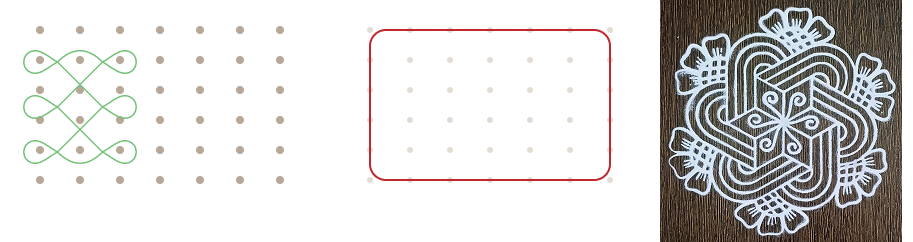
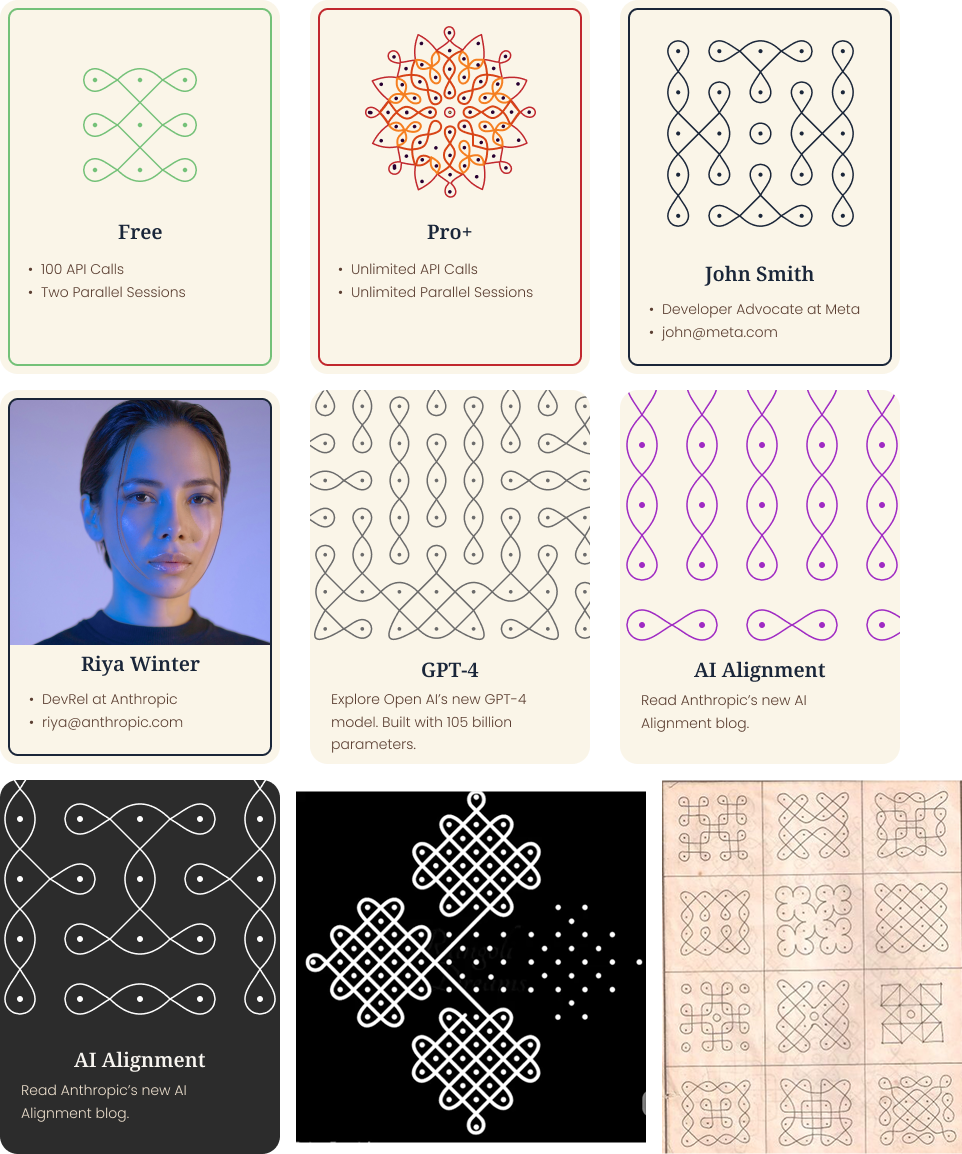
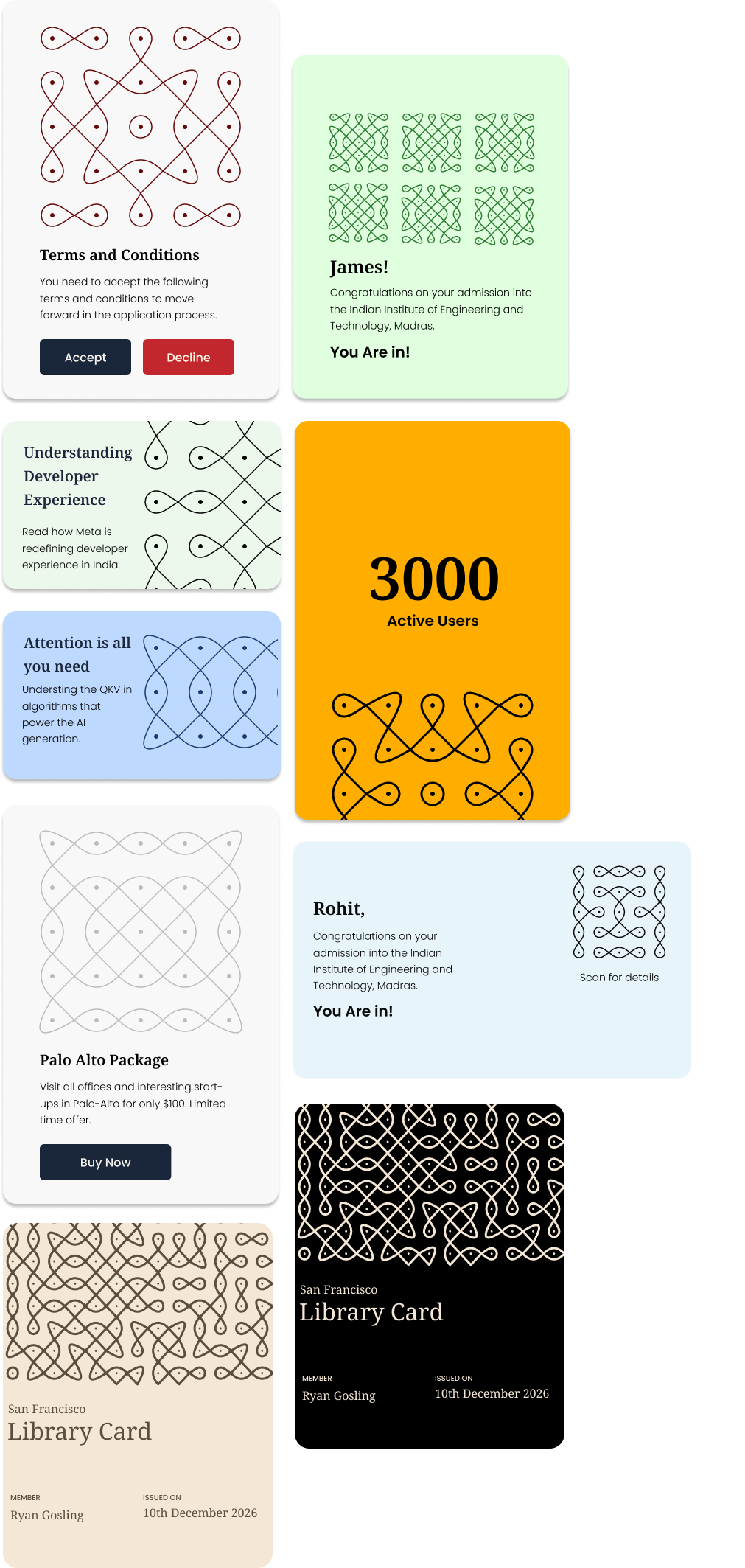
In traditional Indian culture, a Kolam is a complex geometric line drawing composed around a precise, mathematical matrix of dots, drawn daily at the threshold of a home to invite prosperity. For the Karigar system, this underlying "dot lattice" serves as our foundational grid. Just as a kolam artist uses the exact same grid of dots to weave an endless variety of distinct motifs, our system uses this modular lattice to generate a highly flexible array of UI cards, responsive layouts, and dynamic component states. Because the entire structure is mathematically anchored in symmetry, the system naturally inherits a sense of perfect balance and rhythmic proportion. No matter how complex or maximalist the interface becomes, this symmetrical foundation ensures that the underlying pattern remains harmonious, predictable, and visually grounding.
.png)
.png)